
Show summary Hide summary
- Why Repotting Peace Lilies Changes Everything: The Science Behind Faster Growth
- When and How Often to Repot for Maximum Blooms
- Choosing the Right Pot and Perfect Soil Mix: A Step-by-Step Blueprint
- Expert Repotting Technique: Minimizing Shock, Maximizing Results
- Aftercare: Fertilizing and Environmental Tweaks for Explosive Growth and Flowers
- FAQ
If you want your Peace Lily to thrive, there is one secret step that both scientists and professional growers agree on: strategic repotting. Learning how to repot a Peace Lily so it grows faster, healthier, and produces more flowers is the game-changer most plant owners overlook. While many guides mention simply “giving your lily a bigger pot,” few give you a scientifically backed, step-by-step method for repotting that unlocks explosive growth and abundant blooms.
In this practical, expert-driven guide, you will discover exactly why and how to repot your Peace Lily at just the right moment, using tips grounded in plant biology and decades of hands-on experience. We will walk you through every critical step, from choosing the ideal soil blend for vigorous roots, to minimizing transplant shock and boosting your plant’s natural ability to flower. Whether you are reviving a struggling Peace Lily or pushing a healthy one to its prime, this method ensures you will see real, dramatic results—with more luscious leaves and those stunning white blossoms.
Why Repotting Peace Lilies Changes Everything: The Science Behind Faster Growth
Repotting a Peace Lily is not just housekeeping, it is a scientifically proven catalyst for revitalizing both growth and flowering. Over time, these plants often become rootbound, with their roots circling the pot and competing for limited space and nutrients. This crowding severely restricts root health and diminishes nutrient uptake, making it difficult for the plant to sustain healthy leaves or develop abundant blooms.
The 7 Best Crabgrass Killers: Top Picks for Every Lawn
What to Plant Where Grass Won’t Grow: 9 Shade-Loving Lawn Grasses
Fresh soil after repotting not only replenishes nutrients but also improves aeration, directly benefiting the growth cycle. The act of repotting disturbs the roots just enough to trigger biological responses within the plant, sending signals that promote new leaf and flower development. These flowering triggers are an evolutionary response that encourages Peace Lilies to rebound with extra vigor. In short, regular repotting is essential if your goal is to accelerate growth, boost health, and enjoy more spectacular flowers.
When and How Often to Repot for Maximum Blooms
The best time for repotting your Peace Lily is early spring, just as new growth begins. This seasonal timing ensures the plant is already primed for active growth, helping reduce plant stress and the risk of transplant shock. Experts recommend repotting every 12 to 18 months for optimal health and flowering, though some vigorous plants may need it annually.
- Crowded roots
- Slower growth
- Wilting despite consistent watering
- Roots visibly circling the container
Key signs your Peace Lily is overdue for a new pot include crowded roots, slower growth, wilting despite consistent watering, or roots visibly circling the container. Addressing these indicators with the right repotting frequency not only encourages faster recovery, but also sets the stage for a dramatic increase in blooms and overall plant vitality. For insights on larger garden rejuvenation, see the Expert Gardener’s Guide: Removing Grass from Flower Beds Without Damaging Your Other Plants.
Choosing the Right Pot and Perfect Soil Mix: A Step-by-Step Blueprint
Selecting the optimal pot is essential for supporting robust root expansion and maintaining excellent drainage. Look for a container with multiple drainage holes to prevent waterlogged roots and choose one that is just 2-3 inches wider than your Peace Lily’s root ball. Avoid pots that are excessively large, as too much unused space can lead to poor aeration and root stress.
- Start with a high-quality potting mix as your base.
- Incorporate organic matter, such as coconut coir or finely shredded bark, to encourage rich microbial life.
- Add perlite to ensure the mix remains airy and drains efficiently, minimizing the risk of root rot.
The secret to a thriving Peace Lily lies in the soil blend you use. Start with a high-quality potting mix as your base, then incorporate organic matter, such as coconut coir or finely shredded bark, to encourage rich microbial life. Adding perlite ensures the mix remains airy and drains efficiently, minimizing the risk of root rot. By tailoring your potting mix for superior aeration and balanced moisture retention, you create the biological conditions Peace Lilies need for accelerated growth, strong health, and more frequent blooms. Learn more about sustainable landscaping small front yard to optimize overall plant health in your space.
Expert Repotting Technique: Minimizing Shock, Maximizing Results
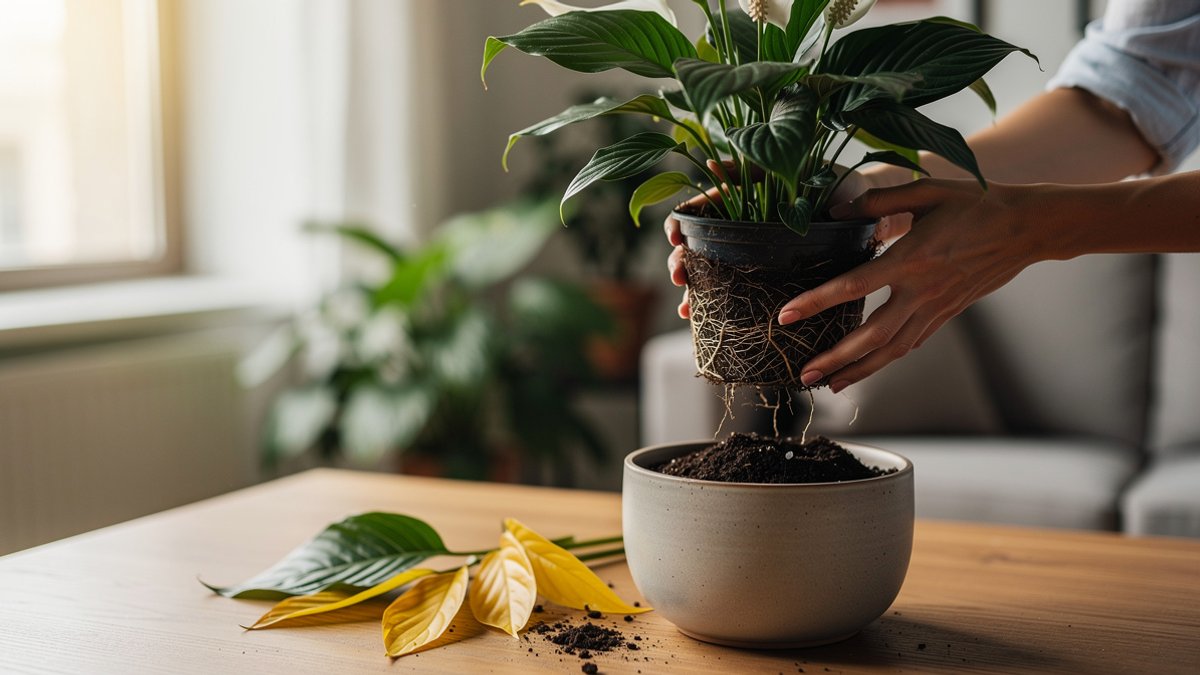
- Begin by gently handling your Peace Lily, supporting both its base and root ball as you ease it out of the old pot. Avoid pulling on the stems, as this can cause hidden stress to the plant.
- Once removed, carefully untangle any circling roots with your fingers. If you come across roots that are brown, mushy, or excessively long, use sterilized scissors to perform root trimming. This removes potential sites for fungal infections and encourages vigorous new growth.
- Before settling your Peace Lily in its new pot, dust away any old, compacted soil to make space for fresh, biologically active mix. Position the plant so that the crown sits just above the soil line and then fill in around the roots, firming the mix lightly without packing it tightly.
- Water generously to remove air pockets and ensure immediate hydration.
- To further reduce transplant shock and discourage fungal issues, apply a thin layer of organic mulching. This stabilizes soil temperature and maintains the right moisture to nurture roots as they adjust.
Before settling your Peace Lily in its new pot, dust away any old, compacted soil to make space for fresh, biologically active mix. Position the plant so that the crown sits just above the soil line and then fill in around the roots, firming the mix lightly without packing it tightly. Water generously to remove air pockets and ensure immediate hydration. To further reduce transplant shock and discourage fungal issues, apply a thin layer of organic mulching. This stabilizes soil temperature and maintains the right moisture to nurture roots as they adjust.
Aftercare: Fertilizing and Environmental Tweaks for Explosive Growth and Flowers
Post-repotting, your Peace Lily is entering a crucial recovery and growth phase. To kickstart rapid development and maximize those future flower spikes, switch to a balanced liquid fertilizer once you see signs of active new growth. Dilute the fertilizer to half strength and follow a consistent feeding schedule about every two to four weeks, always on damp soil to avoid root burn.
Pay close attention to light and humidity, as these are key to pushing out healthy foliage and continuous blooms. Keep your Peace Lily in bright, indirect light for extended periods, which signals the plant to produce more flowers. Boost humidity by grouping plants together or using a pebble tray with water underneath the pot. These micro-adjustments make a real difference in both growth speed and flower production. For indoor plant enthusiasts, you might also enjoy discovering indoor gardening apartment strategies.
With these aftercare steps, your Peace Lily will not only recover but surpass its former health. Consistent attention to feeding, light, and humidity is the true catalyst for lush, flowering growth all year round.
FAQ
How do I know when my Peace Lily needs repotting?
If your Peace Lily shows signs of slowed growth, roots circling the pot, or wilting despite proper watering, it’s time for repotting peace lily. Look for roots emerging from the drainage holes as a clear sign.
What is the best time of year for repotting Peace Lily?
The ideal time for repotting peace lily is in early spring, just as new growth appears. This helps the plant recover quickly and supports vigorous flowering.
What type of soil should I use when repotting Peace Lily?
Use a light, well-draining potting mix that retains some moisture, such as a blend of peat, perlite, and compost. Good soil choice during repotting peace lily encourages strong root development and healthier blooms.
How can I avoid transplant shock when repotting Peace Lily?
Overlooked Yard Spots Perfect for Mulching You Haven’t Tried Yet
Plants Gardeners Recommend Avoid Growing from Seed
Be gentle with the roots and avoid damaging them during repotting peace lily. Water the plant well after repotting and keep it out of direct sunlight for a few days to help it adjust.
How often should I repot my Peace Lily for optimal growth?
Repotting peace lily every 12 to 18 months is recommended for best results. Regular repotting ensures your plant has enough space and nutrients for healthy, abundant flowering.